


Buy New
-
To see product details, add this item to your cart.
Ships from: Amazon.com Sold by: Amazon.com
Save with Used - Very Good
-
To see product details, add this item to your cart.
FREE Returns
Return this item for free
We offer easy, convenient returns with at least one free return option: no shipping charges. All returns must comply with our returns policy.
Learn more about free returns. How to return the item? - Go to your orders and start the return
- Select your preferred free shipping option
- Drop off and leave!
Ships from: Amazon Sold by: Backbeat Books
Download the free Kindle app and start reading Kindle books instantly on your smartphone, tablet, or computer - no Kindle device required.
Read instantly on your browser with Kindle for Web.
Using your mobile phone camera - scan the code below and download the Kindle app.

Follow the author
OK
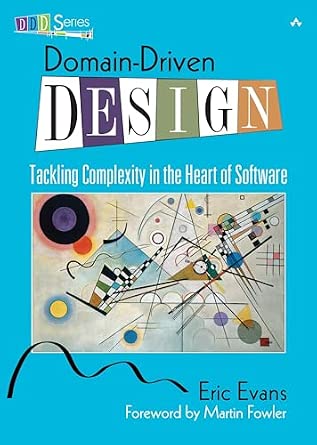
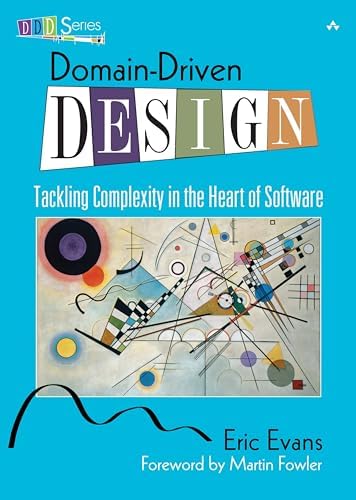
Domain-Driven Design: Tackling Complexity in the Heart of Software
Purchase options and add-ons
Incorporate effective domain modeling into the software development process
Software design thought leader and founder of Domain Language, Eric Evans, provides a systematic approach to domain-driven design, presenting an extensive set of design best practices, experience-based techniques, and fundamental principles that facilitate the development of software projects facing complex domains. Intertwining system design and development practice, this book incorporates numerous examples based on actual projects to illustrate the application of domain-driven design to real-world software modeling and development.
- Domain Model: Part I outlines the goals of domain-driven development, defines terms, and gives an overview of the implications of using the domain model to drive communication and design
- Model-Driven Design: Part II condenses a core of best practices in object-oriented domain modeling into a set of basic building blocks and focuses on the kinds of decisions that keep the model and implementation aligned with each other, each reinforcing the other’s effectiveness
- Refactoring: Part III delves into modeling principles that can guide choices along the way, and techniques that help direct the search
- Strategic Design: Part IV explores a triad of principles that apply to the system as a whole: context, distillation, and large-scale structure
Throughout the book, discussions are illustrated not with over-simplified, “” problems, but with realistic examples adapted from actual projects. With this book in hand, object-oriented developers, system analysts, and designers will have the guidance they need to organize and focus their work, create rich and useful domain models, and leverage those models into quality, long-lasting software implementations.
“The book is a fun read. Eric has lots of interesting stories, and he has a way with words. I see this book as essential reading for software developers―it is a future classic.”
―Ralph Johnson, author of Design Patterns
- ISBN-100321125215
- ISBN-13978-0321125217
- Edition1st
- PublisherAddison-Wesley Professional
- Publication dateAugust 20, 2003
- LanguageEnglish
- Dimensions7.25 x 1.4 x 9.6 inches
- Print length560 pages
![]() |
Customers who viewed this item also viewed
Customers also bought or read
- Clean Architecture: A Craftsman's Guide to Software Structure and Design (Robert C. Martin Series)
PaperbackDelivery Mon, Jun 29 - Refactoring: Improving the Design of Existing Code (2nd Edition) (Addison-Wesley Signature Series (Fowler))
HardcoverFREE delivery Jul 9 - 15 - Learning Domain-Driven Design: Aligning Software Architecture and Business Strategy
PaperbackFREE delivery Mon, Jun 29 - The Pragmatic Programmer: Your Journey To Mastery, 20th Anniversary Edition (2nd Edition)#1 Best SellerSoftware Testing
HardcoverFREE delivery Mon, Jun 29 - Software Architecture: The Hard Parts: Modern Trade-Off Analyses for Distributed Architectures
PaperbackFREE delivery Mon, Jun 29 - Test Driven Development: By Example (Addison-Wesley Signature Series (Beck))
PaperbackFREE delivery Mon, Jun 29 - Fundamentals of Software Architecture: A Modern Engineering Approach#1 Best SellerComputer Programming Logic
PaperbackFREE delivery Mon, Jun 29 - Clean Code: A Handbook of Agile Software Craftsmanship (Robert C. Martin Series)
PaperbackFREE delivery Mon, Jun 29 - Extreme Programming Explained: Embrace Change, 2nd Edition (The XP Series)
PaperbackFREE delivery Jul 2 - 7 - Domain-Driven Refactoring: A hands-on DDD guide to transforming monoliths into modular systems and microservices
PaperbackDelivery Mon, Jun 29 - Head First Design Patterns: Building Extensible and Maintainable Object-Oriented Software 2nd Edition
PaperbackFREE delivery Mon, Jun 29 - Domain Modeling Made Functional: Tackle Software Complexity with Domain-Driven Design and F#
Paperback$3.99 delivery Jul 10 - 15 - Architecture Patterns with Python: Enabling Test-Driven Development, Domain-Driven Design, and Event-Driven Microservices
PaperbackFREE delivery Mon, Jun 29 - Mythical Man-Month, The: Essays on Software Engineering, Anniversary Edition
PaperbackDelivery Jul 6 - 10 - Modern Software Engineering: Doing What Works to Build Better Software Faster
PaperbackDelivery Mon, Jun 29 - Software Architecture in Practice (SEI Series in Software Engineering)
HardcoverFREE delivery Mon, Jun 29
From the Publisher
From the Foreword by Martin Fowler
"The key to controlling complexity is a good domain model, a model that goes beyond a surface vision of a domain by introducing an underlying structure, which gives the software developers the leverage they need. A good domain model can be incredibly valuable, but it’s not something that’s easy to make. Few people can do it well, and it’s very hard to teach.
Eric Evans is one of those few who can create domain models well. I discovered this by working with him—one of those wonderful times when you find a client who’s more skilled than you are. Our collaboration was short but enormous fun. Since then we’ve stayed in touch, and I’ve watched this book gestate slowly.
It’s been well worth the wait."
Domain-Driven Design Distilled
|
Domain-Driven Design
|
Implementing Domain-Driven Design
|
|
|---|---|---|---|
| Core DDD techniques for building better software | A systematic approach to DDDs for building better software | A top-down approach to understanding DDD | |
| Overview | Concise, readable, and actionable guide to the basics of DDD: What it is, what problems it solves, how it works, and how to quickly gain value from it. | Intertwining design and development practice, this book incorporates numerous examples based on actual projects to illustrate the application of domain-driven design to real-world software development. | Building on Eric Evans’ seminal book, Vaughn Vernon couples guided approaches to implementation with modern architectures, highlighting the importance and value of focusing on the business domain while balancing technical considerations. |
| What Will You Learn | Each core DDD technique for building better software. Never buries you in detail–it focuses on what you need to know to get results. | Design best practices, experience-based techniques, and fundamental principles that facilitate the development of software projects facing complex domains. | Practical DDD techniques through examples from familiar domains and how to use DDD within diverse architectures, including Hexagonal, SOA, Rest, CQRS, Event-Driven, and Fabric/Grid-Based. |
Editorial Reviews
From the Back Cover
“Eric Evans has written a fantastic book on how you can make the design of your software match your mental model of the problem domain you are addressing.
“His book is very compatible with XP. It is not about drawing pictures of a domain; it is about how you think of it, the language you use to talk about it, and how you organize your software to reflect your improving understanding of it. Eric thinks that learning about your problem domain is as likely to happen at the end of your project as at the beginning, and so refactoring is a big part of his technique.
“The book is a fun read. Eric has lots of interesting stories, and he has a way with words. I see this book as essential reading for software developers―it is a future classic.”
― Ralph Johnson, author of Design Patterns“If you don’t think you are getting value from your investment in object-oriented programming, this book will tell you what you’ve forgotten to do.
“Eric Evans convincingly argues for the importance of domain modeling as the central focus of development and provides a solid framework and set of techniques for accomplishing it. This is timeless wisdom, and will hold up long after the methodologies du jour have gone out of fashion.”
― Dave Collins, author of Designing Object-Oriented User Interfaces“Eric weaves real-world experience modeling―and building―business applications into a practical, useful book. Written from the perspective of a trusted practitioner, Eric’s descriptions of ubiquitous language, the benefits of sharing models with users, object life-cycle management, logical and physical application structuring, and the process and results of deep refactoring are major contributions to our field.”
― Luke Hohmann, author of Beyond Software Architecture"This book belongs on the shelf of every thoughtful software developer."
--Kent Beck
"What Eric has managed to capture is a part of the design process that experienced object designers have always used, but that we have been singularly unsuccessful as a group in conveying to the rest of the industry. We've given away bits and pieces of this knowledge...but we've never organized and systematized the principles of building domain logic. This book is important."
--Kyle Brown, author of Enterprise Java™ Programming with IBM® WebSphere®
The software development community widely acknowledges that domain modeling is central to software design. Through domain models, software developers are able to express rich functionality and translate it into a software implementation that truly serves the needs of its users. But despite its obvious importance, there are few practical resources that explain how to incorporate effective domain modeling into the software development process.
Domain-Driven Design fills that need. This is not a book about specific technologies. It offers readers a systematic approach to domain-driven design, presenting an extensive set of design best practices, experience-based techniques, and fundamental principles that facilitate the development of software projects facing complex domains. Intertwining design and development practice, this book incorporates numerous examples based on actual projects to illustrate the application of domain-driven design to real-world software development.
Readers learn how to use a domain model to make a complex development effort more focused and dynamic. A core of best practices and standard patterns provides a common language for the development team. A shift in emphasis--refactoring not just the code but the model underlying the code--in combination with the frequent iterations of Agile development leads to deeper insight into domains and enhanced communication between domain expert and programmer. Domain-Driven Design then builds on this foundation, and addresses modeling and design for complex systems and larger organizations.Specific topics covered include:
- Getting all team members to speak the same language
- Connecting model and implementation more deeply
- Sharpening key distinctions in a model
- Managing the lifecycle of a domain object
- Writing domain code that is safe to combine in elaborate ways
- Making complex code obvious and predictable
- Formulating a domain vision statement
- Distilling the core of a complex domain
- Digging out implicit concepts needed in the model
- Applying analysis patterns
- Relating design patterns to the model
- Maintaining model integrity in a large system
- Dealing with coexisting models on the same project
- Organizing systems with large-scale structures
- Recognizing and responding to modeling breakthroughs
With this book in hand, object-oriented developers, system analysts, and designers will have the guidance they need to organize and focus their work, create rich and useful domain models, and leverage those models into quality, long-lasting software implementations.
About the Author
Eric Evans is the founder of Domain Language, a consulting group dedicated to helping companies build evolving software deeply connected to their businesses. Since the 1980s, Eric has worked as a designer and programmer on large object-oriented systems in several complex business and technical domains. He has also trained and coached development teams in Extreme Programming.
Product details
- Publisher : Addison-Wesley Professional
- Publication date : August 20, 2003
- Edition : 1st
- Language : English
- Print length : 560 pages
- ISBN-10 : 0321125215
- ISBN-13 : 978-0321125217
- Item Weight : 2.75 pounds
- Dimensions : 7.25 x 1.4 x 9.6 inches
- Best Sellers Rank: #40,632 in Books (See Top 100 in Books)
About the author

Eric Evans is a thought leader in software design and domain modeling. The founder of Domain Language and author of Domain-Driven Design, he recently founded a modeling community where those interested in domain modeling can come together to learn and discuss effective practices. He’s worked on successful Java and Smalltalk projects in fields including finance, shipping, insurance, and manufacturing automation.
Eric looks for opportunities to help organizations to get more value from their software development efforts by connecting technical thinking with business thinking—and developing supple domain models that form the heart of software applications. He conducts workshops and coaches teams on strategic design and domain modeling. He aslo, mentors teams to smoothly mesh design and process best practices and bring those techniques to bear on effectively delivering core value.
For information on the trainings Eric and his staff provide, visit his website at www.domainlanguage.com.